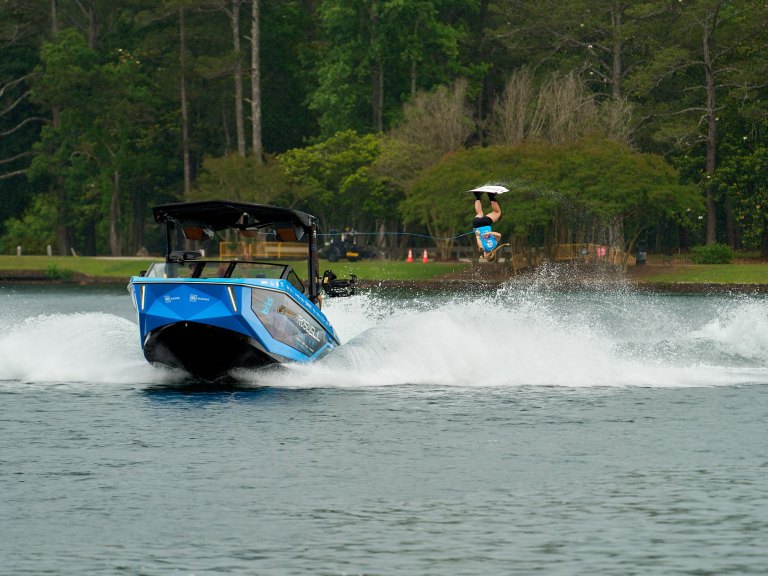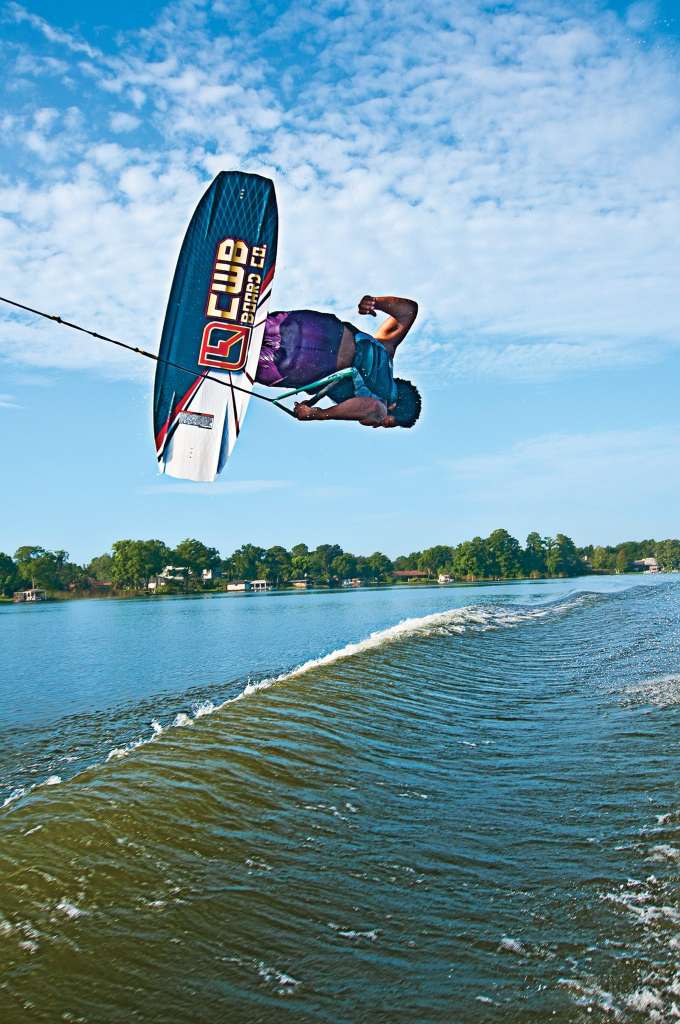
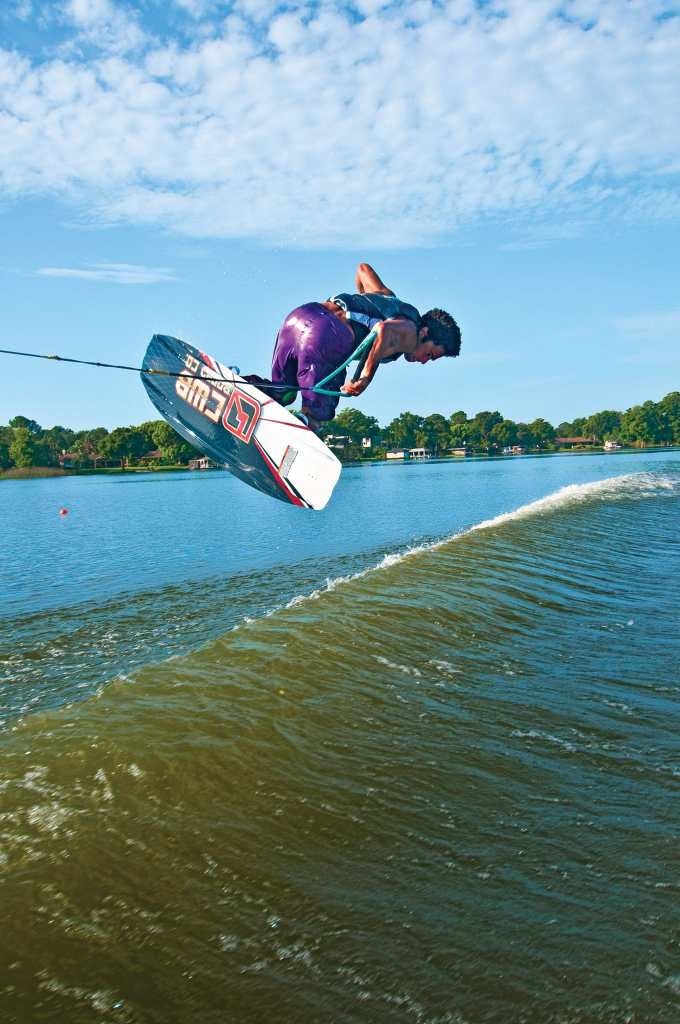
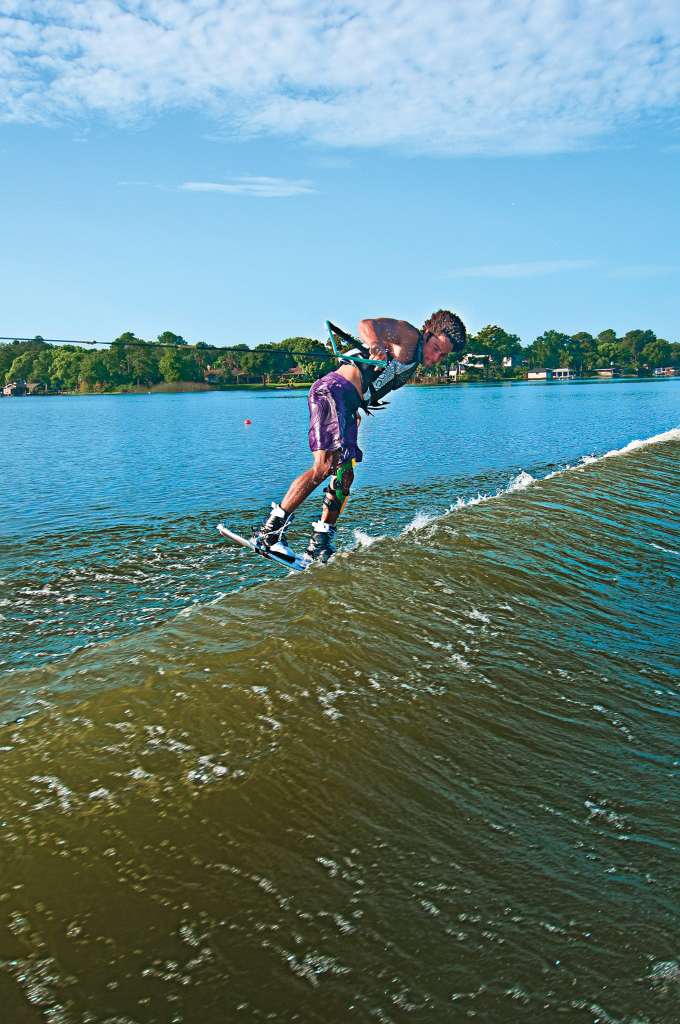
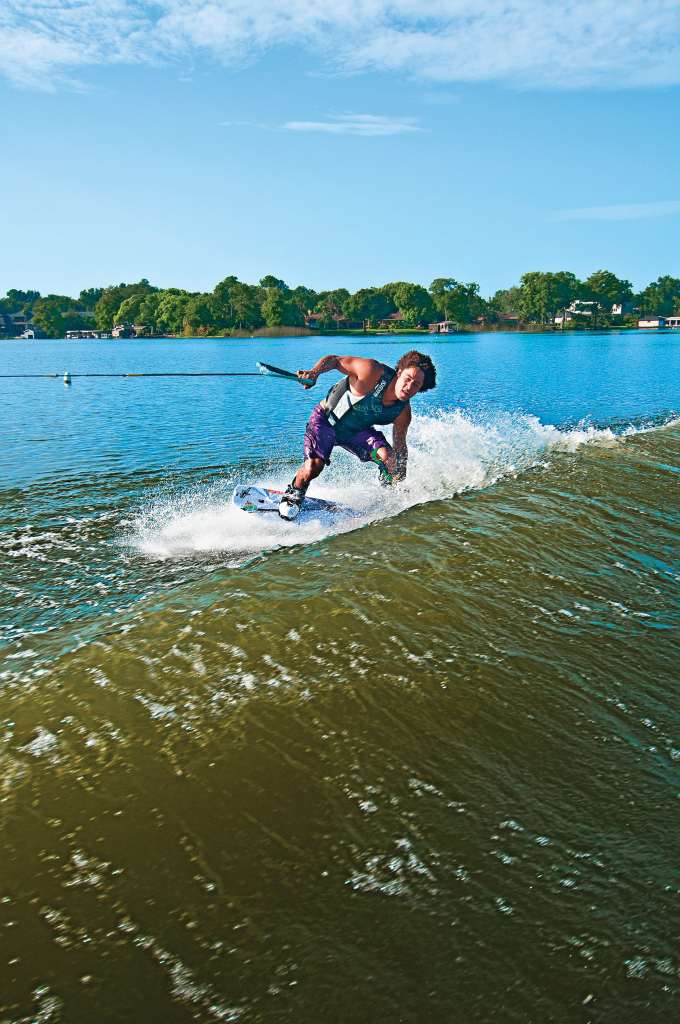
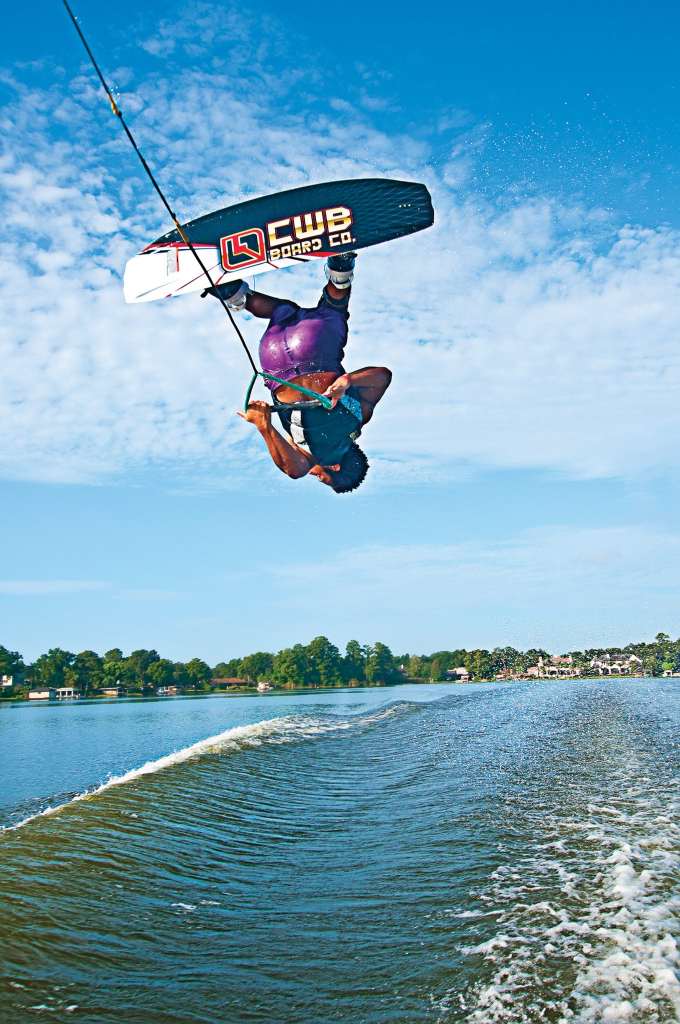
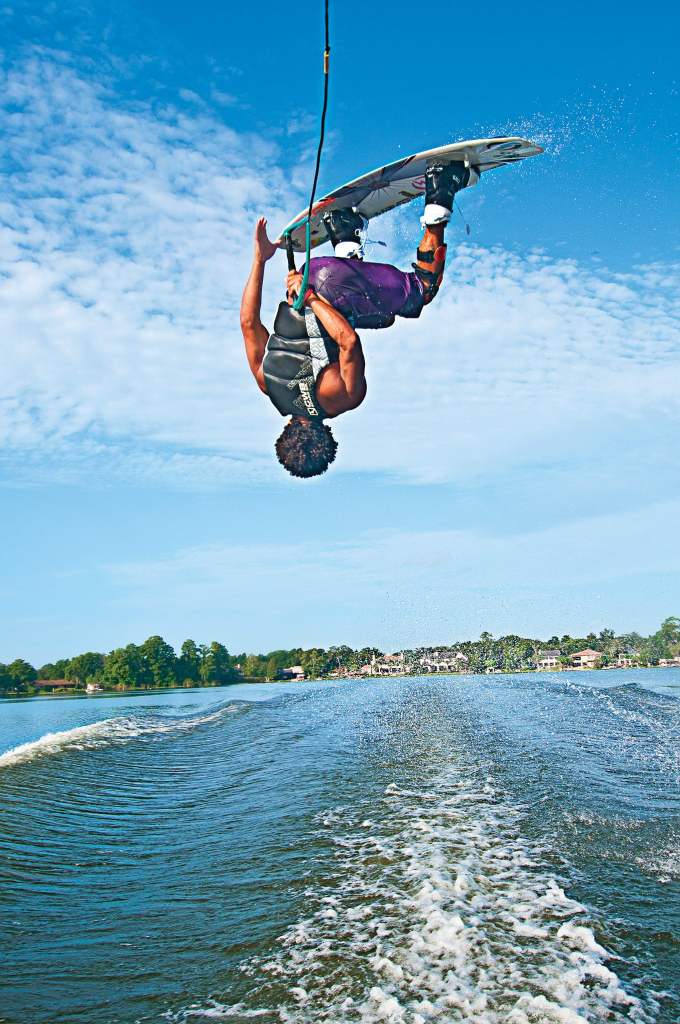
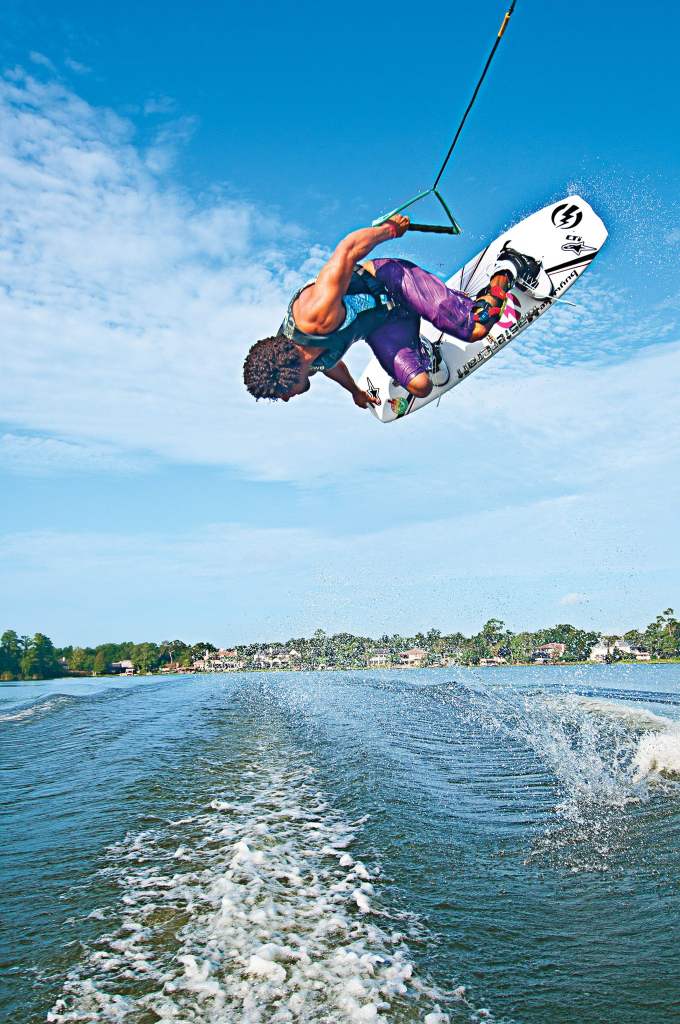
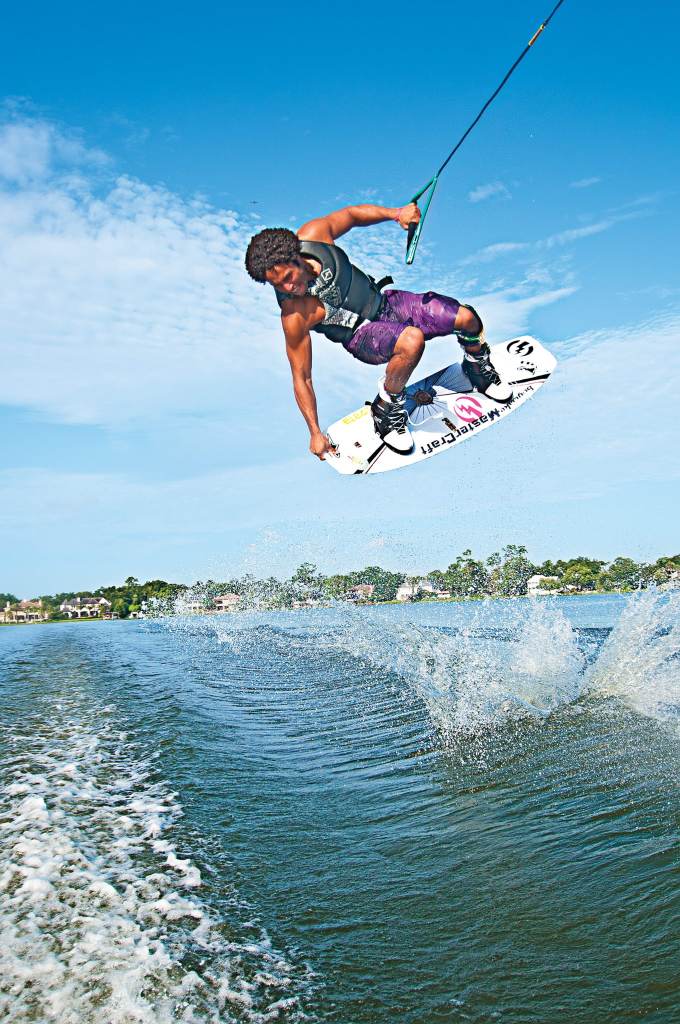
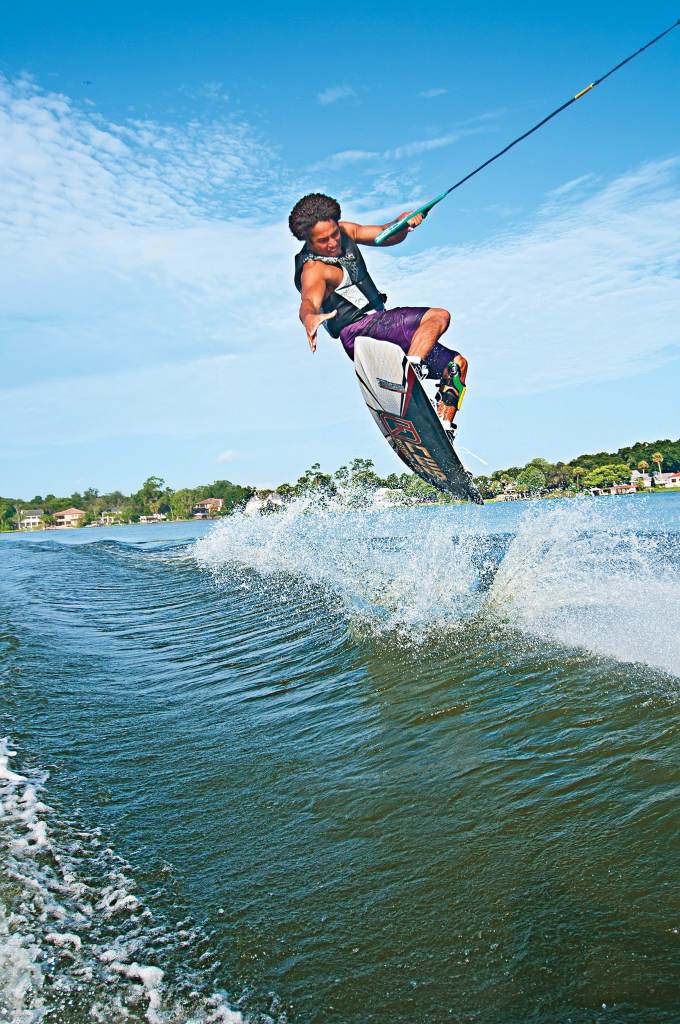
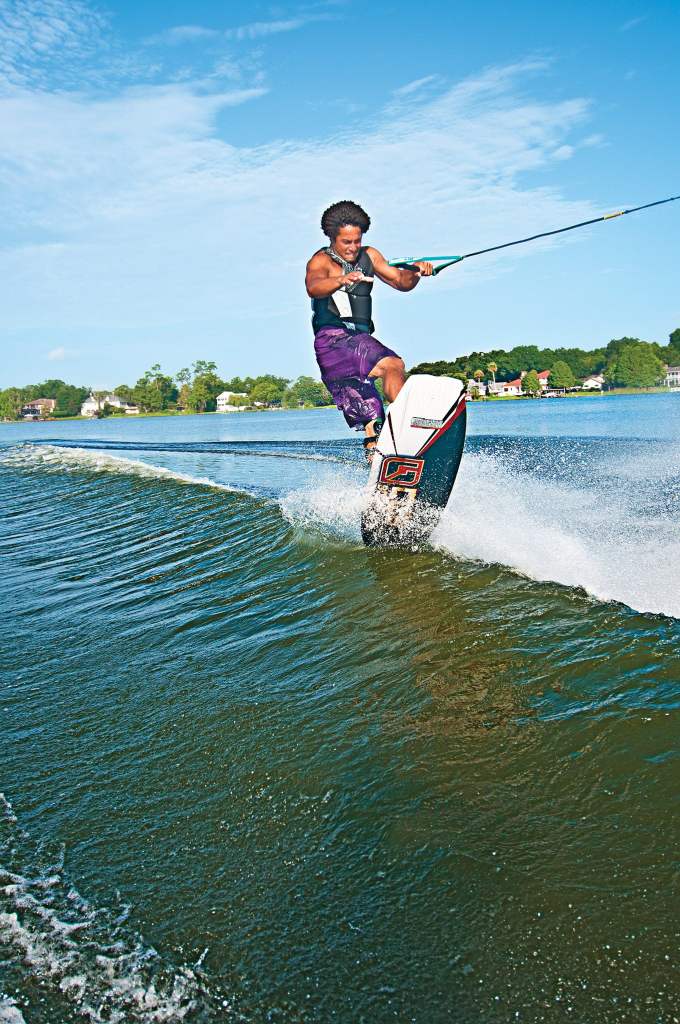
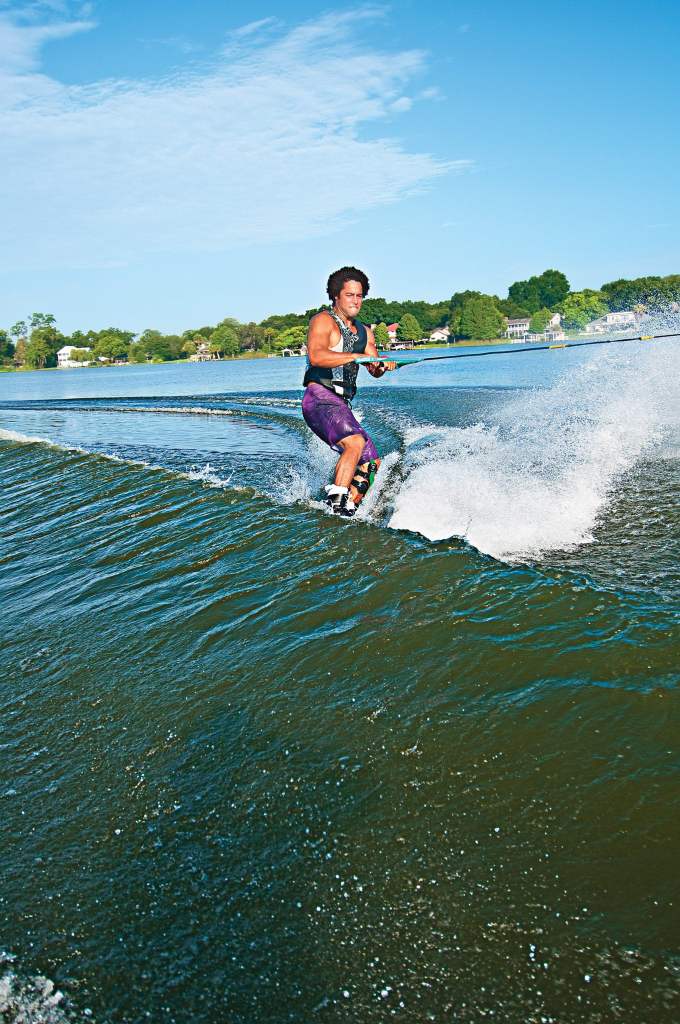
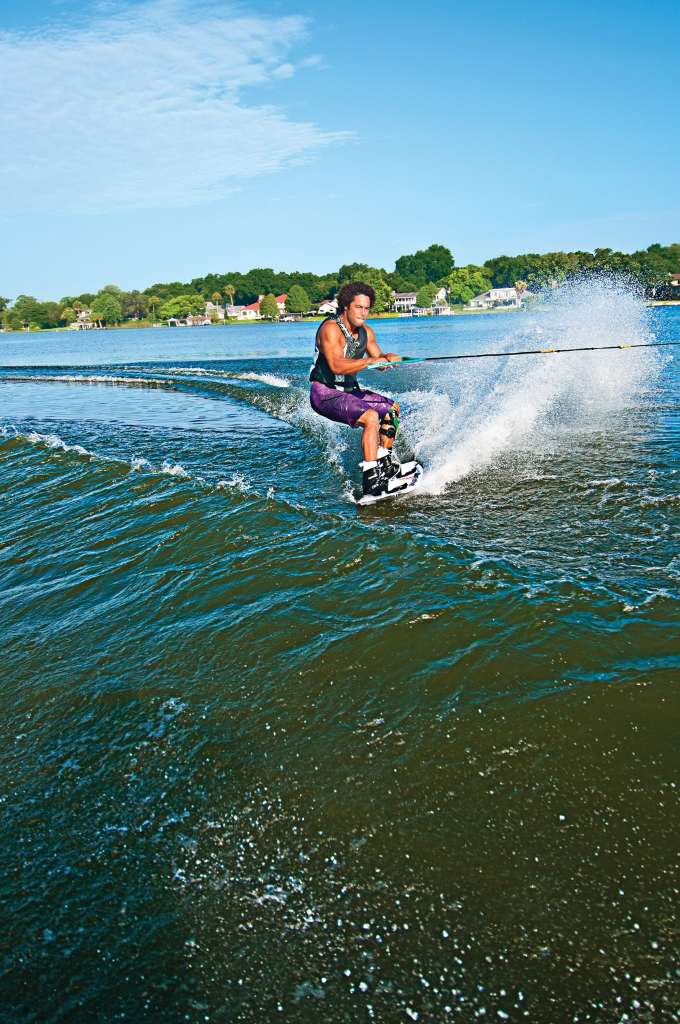
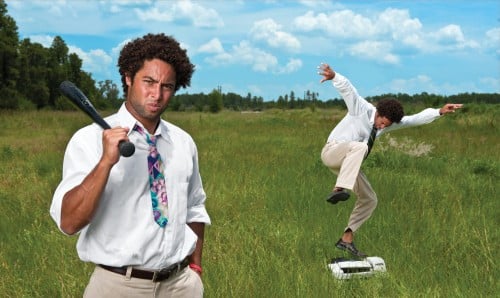
Josh Palma is a late bloomer — at least by pro wakeboarding’s standards. While most of his peers were chasing titles on the Pro Wakeboard Tour, Palma was pursuing a career in baseball. But after a shoulder injury ended his stint in center field, Palma decided to pursue his passion and took a belated shot at wakeboarding for a living. He’s made the most of it. After a top-10 finish in the 2010 King of Wake and new first-team deals with MasterCraft and CWB, Palma is enjoying his most successful stretch ever as a professional rider. He’s even set to appear on the silver screen this September, riding and grappling with animatronic sharks as a stunt man in the new horror flick Shark Night 3D. Though he was late to the party, Palma is poised to make his way in wakeboarding. In fact, Palma’s slow start might actually have helped him cement his future in wakeboarding. Words: Luke Woodling Photos: Bill Doster
How did you get into wakeboarding? You grew up in Orlando, right?
Yeah, I grew up on the Maitland-Winter Park chain of lakes. I had three older brothers, and we really didn’t have an interest in the lake. We played all the conventional sports — basketball, baseball, soccer, tennis. We were super-busy with all that stuff, so we never had any time to get into water sports. Then, one summer I was at Rollins College basketball camp and Joel Cahill invited me to try wakeboarding. That sounded interesting to me, so I went to his house and rode his HO skurfer with sandals. I got up pretty quickly and carved around. I started riding with him a lot the rest of that summer. I did my first wake to wake about a week later, and I was hooked.
How old were you at that point?
I would have been 11, almost 12.
How did your wakeboarding progress from there? Were you still playing those other sports?
Yeah, I played a lot of basketball and baseball. That was kind of my focus, but soon after I started riding with Joel, my parents got me a board for Christmas. I got a Full Tilt Mike Weddington Function 55, and I started riding. Fortunately, my oldest brother got into it with me, so I had someone to ride with when I wasn’t riding with Joel. At that point, wakeboarding was a passion and I loved it, but I never really thought it would be more than my favorite hobby. I just didn’t think it was something I would take seriously, much less make a career out of.
What changed?
When I was about 15, Seth Olsen, who used to work for WAKEBOARDING magazine, saw me riding on my parent’s lake. At that point, I wasn’t great, but I had a good foundation. I could do all the basic inverts and 3s and 5s and I think I could do a couple of mobes. He and I rode together a handful of times, and he was just an awesome guy; he really supported me. He got me into Surf Expo and introduced me to some of the guys at Liquid Force. That was kind of my first foot in the door, and they got me on a product agreement. That was pretty much where things stayed for me for the next few years, even as I got into college. Right after I finished high school, I got into some of the Gravel Tour events, and my first time out I won overall in Outlaw. That kind of gave me the sense that if I got into this a little more, I could potentially do something. But that was a little tough because I actually went to Rollins College to play baseball.
What happened there?
I red-shirted my freshman year because I had some work done on my shoulder. I loved baseball, and I still miss it a lot, but after I had that work done on my arm, I wasn’t sure I was going to be able to achieve what I wanted to in baseball. My sophomore year, I shifted my focus and decided to go all in with wakeboarding.
Was that the first time you really put wakeboarding first?
Yeah, I figured if I was going to do it, I didn’t want to do it as just a hobby. When I get into something, it’s either a hobby or all the way — there’s no real in between for me. At that point, I really started to try to make my riding look better and refine things. Plus, I wanted to start riding in some pro contests. Because the only experience I had was five Gravel Tour stops and a couple collegiate events, I knew that was going to be tough. I had very little contest experience and it’s not like I came up through Junior Men. I think at my first contest I had Shawn Watson and Ike Eisenhauer in my heat — guys I had grown up watching. I knew it was going to take a ton of work because I had a pretty late start and a different entrance into the sport than a lot of the guys, but I was willing to go for it. The first time, I did terrible.
Shortly after you started competing, you got hooked up with Shaun Murray and The Boarding School. How did that happen?
I had a friend named Tom Leonard who lived on my parent’s lake and was doing a bunch of real estate development out by Murray’s house. I did some clinics and lessons with him and his kids and he told me he had gotten to be pretty good buddies with Murray and he wanted to take me out there one day. Murray had been my idol since day one, when I watched High Wake Drifters and Fluid. So I went out to Murray’s house and had two of the best sets I ever had in my life. I did back-to-back whirly 5s and a couple 7s and just went big and had a blast. That was probably the best day I’ve ever had wakeboarding. It was just amazing to go out and ride like that with Murray and be at his house behind his boat. As soon as we got done riding, Murray called Hyperlite and told them to sign me right away. A couple months after that, I won buywake.com’s Global Rider search, so things just really took off for the next six months to a year. Murray helped a lot, and Chuck Morrow from buywake.com opened a ton of doors for me. I was really fortunate that I met some of the best and most influential people in our industry early on in my career.
You were still in school then?
I still had two years of college left, so it was kind of up in the air whether I would finish or not. I even talked to Murray about it. I think he thought I had what it took to stop school and go full-on with wakeboarding, but he didn’t really want to tell me that. I took school really seriously but because I was at Rollins, I was able to ride on Lake Virginia all the time. Yeah, I wasn’t able to train like I could have and I missed some contests because of school, but I rode a lot and I accomplished a lot those next two years. I graduated from Rollins in the spring of ’06.
What was your degree in?
I did psychology and I was in the pre-MBA track, so I took a lot of the core business classes too.
Josh Palma’s Top 3 Ways to Make It in Wakeboarding
1. Create a niche for yourself as a rider by forging your own unique style and skill set.
2. Focus on creating and maintaining long-term relationships with sponsors. Be willing to pay your dues and always make sure your sponsors get the most out of their investment in you. In the end, it will pay off for everyone.
3. Realize there is more to making it in wakeboarding than wakeboarding itself.
Back to Murray. How did your relationship progress, and how did you get hired at The Boarding School?
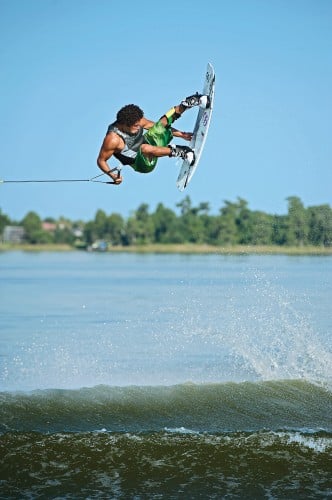
I think Murray put a lot of things on the back burner for me because he didn’t want to put pressure on me to quit school. He and Travis Moye had me out a couple more times while I was still in school to ride and get to know me a little better. They let me coach a little bit to see what the extent of my knowledge was on the technical side of wakeboarding. When I finished school, they slowly brought me in. I was obviously all about it.
How has being a coach there affected your riding?
I can’t even qualify how much Murray, Travis and Kyle Rattray have helped my riding. I had my best year on the Pro Wakeboard Tour last year and finished in the top 10 on the King of Wake. Last year probably wouldn’t have happened as soon as it did had I not been working with those guys. Last summer, Murray took some time off because he just had his second kid, and I worked nonstop. Working and training at The Projects, where the conditions are super-consistent and you can really focus, was one of the biggest contributors to my success last year.
You do a lot of traveling clinics too. How does that fit in with your work at The Boarding School?
Some of the clinics happen through The Boarding School. For instance, we had some campers from South Africa recently, and I ended up flying over there in January to train their family and friends for a month. It provides me with some great travel opportunities, and I think it’s a cool way to grow the sport. It can be tough to balance sometimes, though.
I bet, especially with your other coaching and sponsor commitments. Speaking of which, MasterCraft just signed you to its pro team. What was that like?
They started reaching out to me in 2006 and have helped me out in different ways ever since. Back then, they told me, “This is what we can do for you now, and this is what we want to help you do in the next couple of years.” In 2008-2009, they said: “This is what’s going well. This is where we want you to focus, and this is where we hope to see you in two more years.” Honestly, within three to six months of everything they’ve ever told me they would do, it has happened. When I heard that was looming, it was kind of surreal because when you look at the team, it’s full of legends. Joining that group of riders is one of the biggest honors I’ve ever had. It was like the fireworks at the end of my best contest year. I got to do stunt double work on the movie Shark Night 3D, and then signing with MasterCraft was the conclusion.
Shark Night 3D! How did that happen?
Right before Worlds, I got a call from someone Zane Schwenk knew. He told Zane he needed a wakeboarder to do some stunts and he needed the rider to be really dark-skinned or black. So Zane’s like, “Well, you have one option.” He got me in touch with a stunt coordinator here in Florida and he got me in touch with the stunt coordinator of Shark Night 3D, I’ve done little stuff like this before, and I figured it would be a one-week gig, max. But I ended up doubling one of the male leads in the film and had a lot of different work to do. The only time I came home was for Surf Expo. I was on set for like eight weeks.
How much of the work was riding, and what else did you do?
I did a good bit of riding, and I had to do some intentional falls. I also did some PWC riding and falls and some underwater fighting with animatronic sharks. They were these big remote-control sharks that we shot in a big wave pool. When I got to the set and saw everything that went into some of the underwater shots, it was shocking. I’ll never watch a movie or TV show the same again.
Fighting the sharks — did you lose?
I took some hard crashes doing the intentional falls wakeboarding. I was catching edges doing 25 to 30 mph. But the day I did some of the fights and struggles with this hammerhead shark was one of the toughest days. The thing was 300 or 400 pounds, and it looked real. It had real teeth in it. Basically, they could put different sharks on this metal structure, so the thing was super-hard. It was like this big metal hammer right in front of me. I was beat up for a good week after that.
So you did the grabbing-its-jaws, punching-it-in-the-face thing?
Yeah, the fish would be on a track, and it would charge into me and then I would be basically fending it off. Its action was super real. It would open its mouth, thrash and flick its head up and down and side to side. When I did the stuff in the pool where it was clear and I saw that thing coming at me, I was pretty freaked out the first few takes!
How much influence did you have on the riding portion?
The goal wasn’t to do anything too crazy but to just look solid on the board, go big and ride clean. It was up to me a lot, which was cool. Normally, when you’re shooting, you try to make sure you face the camera, your face is clear and the bottom of your board is really legible. In this case, they said, “If you can land with your back to us, that would be better.” That was kinda weird, but it ended up working out because I’m really comfortable riding either way. Depending on what they needed me to do, I would do tricks either switch or regular to make sure I hit my mark and I wasn’t facing the camera.
Josh Palma’s Top 3 Ways to Defend Yourself Against a Shark
1. Go for the eyes.
2. Avoid wearing red. Sharks tend to attack more aggressively when shades of red are present.
3. Try to punch it in the gills, which is the most sensitive area after the eyes. Punching the nose is a myth and is only effective on rare occasions.
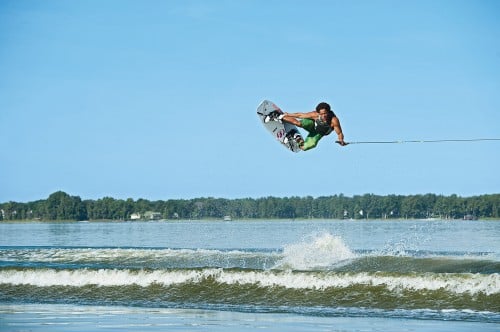
You had to cut your dreads for the movie. How tough was that?
I was a little nervous because for the last couple of years, it’s how some of my sponsors have marketed me and it’s kind of been my niche. It’s a big deal to me. The stunt contracts were weekly, so my fear was that I’d cut my hair and finish my stuff in a week or two weeks. But they guaranteed me I’d work at least six weeks, and I ended up working a good bit more. Pretty much, when I heard that, I was good to go. They were super cool about it. They even entertained the idea of putting dreads on the actor, but that’s so against the way you do things, making the actor look like the stunt double.
Hell, they considered it. That’s a win in itself. That still had to be pretty painful, even though you were compensated.
It was pretty painful, but it was getting to the point where I was going to have to trim them or do something. I could barely put on a helmet. It was getting a little ridiculous.
How long had you been growing them?
Four years. It was funny, my brother said, “So not only have you not paid for a haircut in four years, but you got paid for not getting a haircut in four years.”
Are you bringing them back?
Yeah, but a little more under control, I think. I’m getting a little bit more mature, so I figure I can still have a little edge but keep things a little bit cleaner. I don’t know; we’ll see. They’ll probably just end up getting really long again, that’s my guess.
Do you have plans to do more stunt work in the future?
I just submitted all my stuff for the Screen Actors Guild, so I’ll be a SAG member. The stunt coordinator and I worked really closely with some of the other stunt personnel. They all reached out to me and put my name in for several other gigs, so, yeah, I want to try to continue to pursue that. Especially if I can get involved with more stuff that involves wakeboarding, just to get the sport some exposure on that level. It’s nice not only to have our sport at that level but for me to be able to kind of dictate what that exposure looks like. Just having wakeboarding in a movie, sure, it’s great, but to have it look the way a lot of us riders would like to have it look is cool.
Does your character die?
It’s kind of open-ended. It’s pretty likely that he dies, but you don’t know for sure.
He’s not around anymore, anyway.
Right, he’s not around. But it happens pretty late in the film. That’s what’s funny about the trailer. You see him get attacked in the trailer, so everyone on YouTube is like “Of course, the black guy dies first.” Then somebody said, “Oh, a black guy wakeboarding. This really is a horror movie.”
Speaking of which, has that ever affected your career — being a black guy in a sport that’s 99 percent white dudes?
I think it definitely has. Everyone who’s successful in our sport has found some kind of niche, and I think my niche has a lot to do with the way I look. I like to think that’s just one of the things that makes me different from another rider, but obviously it is an important part. It’s pretty cool, too, because there is that stereotype that you don’t see black people wakeboarding. It’s cool if I can encourage someone who would normally say, “That’s not something I’m into” to say, “Hey, maybe it could be.”
Signing with CWB is another big thing that happened to you this year. How’s that working out?
It’s been awesome. I’ve been able to get involved right away and work with our product engineers and product manager extensively. I can suggest some changes to a board and have a prototype at my house two days later. They really want to work with me to not only give me the best product to ride but the consumers too, which is the way it should be. It’s been a great fit so far, and I’m eager to get even more involved over the next several years.
We’ve talked about a ton of stuff that you do to make it as a pro rider. How hard is it?
I think it’s one thing if you get started when you’re 10 or 12 years old and you don’t have a bunch of financial worries or constraints. Obviously, because I decided to pursue this in college, that wasn’t really a luxury I had. Even last year and the year before, I was really scraping, trying to find ways to generate income. It’s not like just because you ride your wakeboard well your sponsors are going to give the world to you. There’s a lot more to it, and I think that’s what up-and-coming kids need to realize. If you can’t find a way to make it really concrete that your sponsors will benefit from working with you, you might get some help, but it’s going to be pretty short-lived. Not only is it a lot of work to get there, but it’s a lot of work to stay relevant.
How do you plan to stay relevant in wakeboarding?
I’m starting to work on bringing companies into wakeboarding quite a bit. I look at a guy like Ben Greenwood, who basically set up Quiksilver’s entire program for wake. I want to help brands that are successful in other sports get involved in our industry. It’s something I find really interesting, and it’s cool because it kind of combines what I did in college in terms of pysch, marketing and business. For instance, I just signed a deal with Alpinestars and I’m putting a whole program together for Electric as well. I collaborate with the brands to help them generate more sales, which eventually turns into more support for our sport and its athletes. That’s really what I enjoy doing and it’s rewarding because it’s a situation where the rider, the company and the industry all win.
Josh Palma’s Top 3 Ways to Grow a Bitching Crop of Dreads
1. Have a Jamaican muddah.
2. If you have to put beeswax, honey or farm products in your hair to start dreads, you probably shouldn’t be growing them in the first place.
3. Be willing to push through the awkward stages it takes to get there. I’m currently in the mini-afro stage, and I’m fully embracing it.